Miami County Dog Registration Information
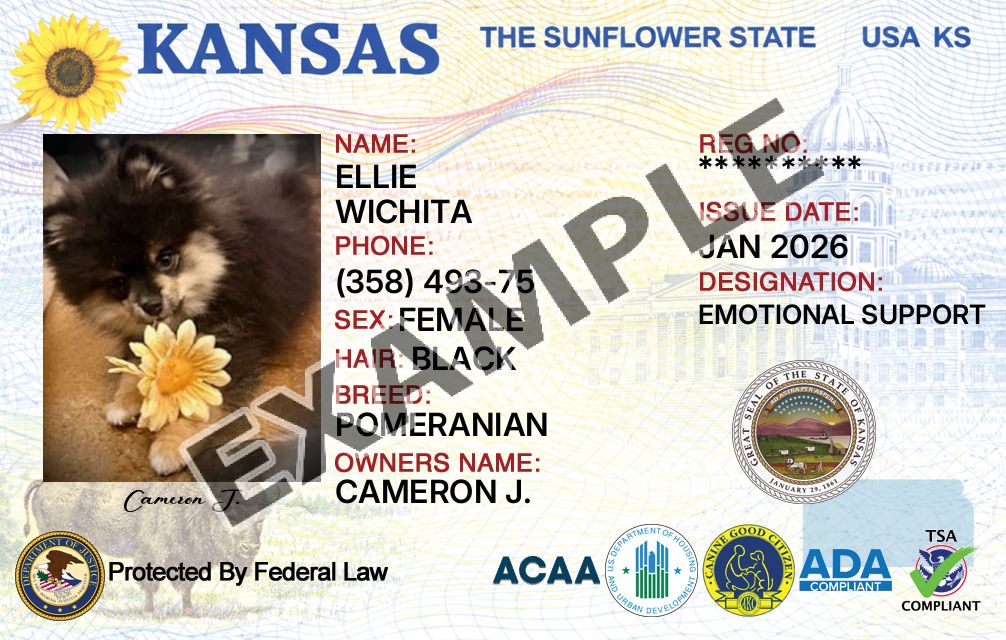
Service Dogs and Emotional Support Animals in Miami, Kansas
If you’re searching where do I register my dog in Miami County, Kansas for my service dog or emotional support dog, the key point is that there are usually two separate tracks people mean by “register”: (1) getting a dog license in Miami County, Kansas (often handled by a city office and/or local animal control depending on where you live), and (2) understanding your dog’s service dog or emotional support animal (ESA) status under the law (which is not issued by a universal federal registry).
Where to Register or License Your Dog in Miami County, Kansas
The offices below are official local government contacts that Miami County residents commonly use for animal control guidance, rabies program questions, and (where applicable) municipal dog licensing. Because licensing rules can vary by city, start with the office that matches your home address (city limits vs. unincorporated county).
Miami County Sheriff’s Office — Animal Control
Miami County Health Department
City of Paola — City Clerk (Dog & Cat Licenses)
City of Osawatomie — Utilities Office (Pet Licensing Submission)
Overview of Dog Licensing in Miami County, Kansas
What “dog licensing” usually means locally
A local dog license is a city- or county-level record that links a dog to an owner and typically confirms the dog is currently vaccinated against rabies. The license often comes with a tag. People searching for an animal control dog license Miami County, Kansas are usually looking for the office that issues the tag or the rules for maintaining it.
City vs. county: requirements can vary within Miami County
In Kansas, many dog licensing rules are handled at the municipal level (city ordinances). That means requirements can differ depending on whether you live:
- Inside city limits (for example, Paola or Osawatomie), where your city may require an annual pet license and proof of rabies vaccination.
- In unincorporated Miami County, where you may need guidance from county animal control about what’s required and how animal-related rules are enforced.
Service dog and ESA status does not replace licensing
Even if your dog is a trained service dog or you have an emotional support animal letter, local licensing rules may still apply if your city or local ordinance requires all dogs to be licensed and vaccinated. “Service dog” is a legal status; “dog license” is a local administrative requirement.
What You Need Before Registering a Dog
Common documents and information
While exact requirements depend on your city/area, most local licensing processes ask for some combination of the following:
- Current rabies vaccination certificate (often required for licensing and tag issuance)
- Rabies tag number (sometimes requested on the application)
- Owner identification (government-issued ID)
- Proof of residency (especially if licensing is city-based)
- Spay/neuter documentation (may affect fees where applicable)
- Microchip information (sometimes requested; some cities may have fee differences tied to microchipping)
Service dog and ESA paperwork: what is (and isn’t) typically needed
| Category | What it is | Common documentation | What it does not do |
|---|---|---|---|
| Dog license | Local city/county licensing record (often tied to rabies vaccination and a tag). | Rabies vaccination certificate, owner/residency info, possible spay/neuter or microchip details, fee (if applicable). | Does not create service dog status or ESA status. |
| Service dog | A dog individually trained to do work or perform tasks for a person with a disability. | Typically no government “registration” is required. In public access settings, staff are generally limited to specific questions about the dog’s tasks (not paperwork demands). | Does not automatically waive local vaccination or licensing rules if those apply to all dogs. |
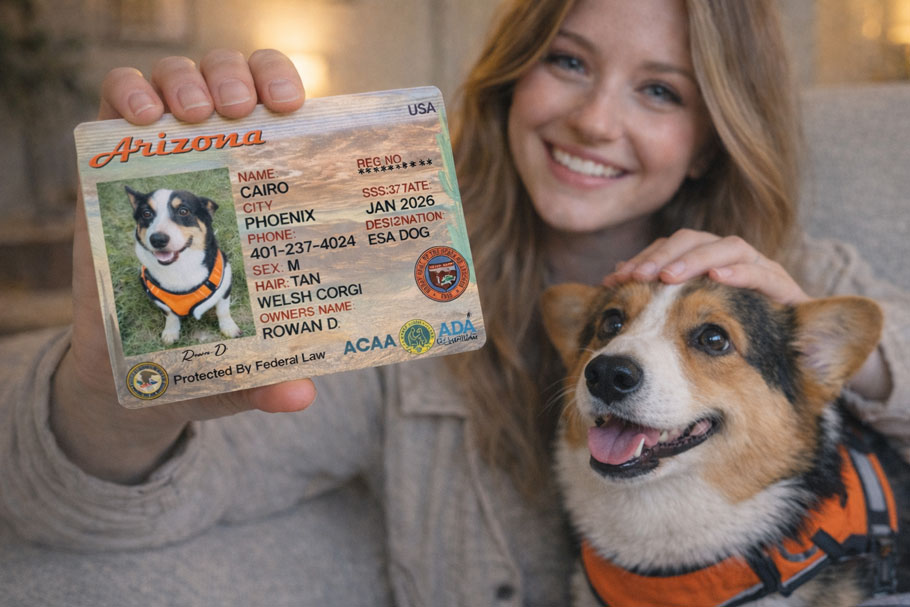
| Emotional support animal (ESA) | An animal that provides comfort by presence and is used as an accommodation in certain housing situations. | A letter/documentation from a licensed healthcare provider may be used for housing accommodation requests (when applicable). | Does not grant the same public access rights as a service dog, and is not issued by a county “ESA registry.” |
Steps to Register or License a Dog in Miami County, Kansas
1) Confirm whether you are in city limits
Your first step in where to register a dog in Miami County, Kansas is confirming whether your address is within a city’s boundaries. Many licensing requirements are city-based. If you’re unsure, call the city office (if you live in a city like Paola or Osawatomie) or call Miami County Animal Control for guidance.
2) Gather vaccination and ownership documentation
Get your dog’s rabies vaccination certificate (and any other requested details such as microchip number). If you are licensing through a city office, have your proof of residency and ID available.
3) Contact the correct office to ask for the current licensing process
- If you live in Paola, contact the City Clerk to confirm current requirements, fees, renewal timing, and how to submit documentation.
- If you live in Osawatomie, contact the Utilities Office to confirm current pet licensing submission steps and any required supporting documents.
- If you live elsewhere in Miami County or are not sure, contact Miami County Animal Control to confirm where licensing is handled for your location and what documentation you’ll need.
4) Submit your application and keep a copy of your records
Submit the form and supporting documents as instructed by the office. Keep copies of your rabies certificate and any license receipt/tag number for your records. If your city issues a tag, attach it to your dog’s collar as required by local rules.
Service Dog Laws in Miami County, Kansas
What makes a dog a service dog
A service dog is generally defined by individual training to perform specific tasks for a person with a disability (for example, guiding, alerting, retrieving, interrupting a medical episode, or other trained task work). The legal status is based on what the dog is trained to do and the handler’s disability-related need—not on purchasing an ID card or finding a single government “service dog registration.”
Licensing and rabies rules can still apply
A service dog may still be subject to the same local requirements that apply to all dogs, such as rabies vaccination and (where required) a dog license in Miami County, Kansas based on your city or area. If you are unsure what applies to your address, Miami County Animal Control or your city clerk’s office can help clarify.
Emotional Support Animal Rules in Miami County, Kansas
What an ESA is (and where it matters most)
An emotional support animal (ESA) is typically used as an accommodation in housing contexts when a person has a disability-related need for the animal’s presence. ESAs are not the same as service dogs because ESAs are generally not required to be task-trained.
ESAs are not “licensed as ESAs” by the county
If you’re looking for “ESA registration” in Miami County, Kansas, it helps to separate two things:
- Local dog licensing (rabies/tag) may be required based on where you live.
- ESA documentation is typically a letter from a licensed healthcare provider used for certain housing accommodation requests (when applicable), not a county-issued ESA license.
Practical tip: keep vaccination records current
Regardless of whether your dog is a pet, service dog, or ESA, keeping rabies vaccination records current is a common local requirement and can be important for public health guidance and for resolving issues if a bite or exposure incident is reported.
Frequently Asked Questions
Local phrasing you might see
Some offices use “pet license,” “dog tag,” “rabies tag,” or “animal licensing” interchangeably. If you’re asking where to register a dog in Miami County, Kansas, clarify whether you need a licensing tag for city compliance, guidance from animal control, or information about service dog versus ESA status.
What You May Need
Disclaimer
Local laws, fees, office locations, and contact details can change. Residents should verify the most current information with their local animal services or licensing office in Miami County, Kansas.
Quick Local Guidance
For many residents, the fastest way to resolve “where do I register my dog” is to decide which of these you need:
- City pet license/tag (often for residents inside city limits)
- County animal control help (for county-wide guidance and enforcement questions)
- Rabies/public health guidance (vaccination records, bite/exposure guidance)
Miami County, Kansas Dog Licensing and Assistance: Plain-English Summary
If you’re licensing a dog for compliance purposes, start by confirming whether your city issues licenses (Paola and Osawatomie provide clear city contacts). If your goal is service dog or emotional support animal “registration,” focus on the legal definitions and documentation that applies to your situation—because those statuses are not created by a single federal registry—while still meeting any local vaccination and licensing requirements that apply where you live in Miami County, Kansas.
Register A Dog In Other Kansas Counties
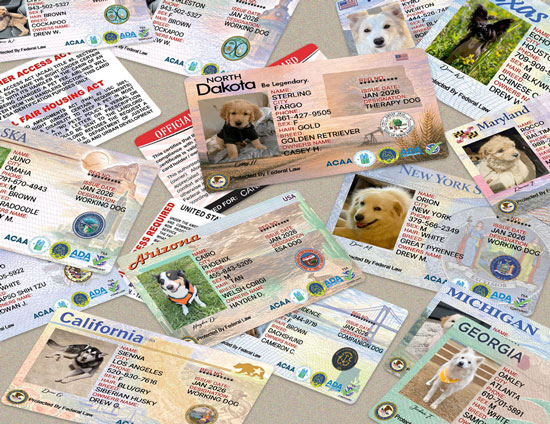
Select your county below to get started with your dog’s ID card. Requirements and license designs may vary by county, so choose your location to see the correct options and complete your pup’s registration.
- Allen County Dog Registration
- Anderson County Dog Registration
- Atchison County Dog Registration
- Barber County Dog Registration
- Barton County Dog Registration
- Bourbon County Dog Registration
- Brown County Dog Registration
- Butler County Dog Registration
- Chase County Dog Registration
- Chautauqua County Dog Registration
- Cherokee County Dog Registration
- Cheyenne County Dog Registration
- Clark County Dog Registration
- Clay County Dog Registration
- Cloud County Dog Registration
- Coffey County Dog Registration
- Comanche County Dog Registration
- Cowley County Dog Registration
- Crawford County Dog Registration
- Decatur County Dog Registration
- Dickinson County Dog Registration
- Doniphan County Dog Registration
- Douglas County Dog Registration
- Edwards County Dog Registration
- Elk County Dog Registration
- Ellis County Dog Registration
- Ellsworth County Dog Registration
- Finney County Dog Registration
- Ford County Dog Registration
- Franklin County Dog Registration
- Geary County Dog Registration
- Gove County Dog Registration
- Graham County Dog Registration
- Grant County Dog Registration
- Gray County Dog Registration
- Greeley County Dog Registration
- Greenwood County Dog Registration
- Hamilton County Dog Registration
- Harper County Dog Registration
- Harvey County Dog Registration
- Haskell County Dog Registration
- Hodgeman County Dog Registration
- Jackson County Dog Registration
- Jefferson County Dog Registration
- Jewell County Dog Registration
- Johnson County Dog Registration
- Kearny County Dog Registration
- Kingman County Dog Registration
- Kiowa County Dog Registration
- Labette County Dog Registration
- Lane County Dog Registration
- Leavenworth County Dog Registration
- Lincoln County Dog Registration
- Linn County Dog Registration
- Logan County Dog Registration
- Lyon County Dog Registration
- Marion County Dog Registration
- Marshall County Dog Registration
- McPherson County Dog Registration
- Meade County Dog Registration
- Mitchell County Dog Registration
- Montgomery County Dog Registration
- Morris County Dog Registration
- Morton County Dog Registration
- Nemaha County Dog Registration
- Neosho County Dog Registration
- Ness County Dog Registration
- Norton County Dog Registration
- Osage County Dog Registration
- Osborne County Dog Registration
- Ottawa County Dog Registration
- Pawnee County Dog Registration
- Phillips County Dog Registration
- Pottawatomie County Dog Registration
- Pratt County Dog Registration
- Rawlins County Dog Registration
- Reno County Dog Registration
- Republic County Dog Registration
- Rice County Dog Registration
- Riley County Dog Registration
- Rooks County Dog Registration
- Rush County Dog Registration
- Russell County Dog Registration
- Saline County Dog Registration
- Scott County Dog Registration
- Sedgwick County Dog Registration
- Seward County Dog Registration
- Shawnee County Dog Registration
- Sheridan County Dog Registration
- Sherman County Dog Registration
- Smith County Dog Registration
- Stafford County Dog Registration
- Stanton County Dog Registration
- Stevens County Dog Registration
- Sumner County Dog Registration
- Thomas County Dog Registration
- Trego County Dog Registration
- Wabunsee County Dog Registration
- Wallace County Dog Registration
- Washington County Dog Registration
- Wilson County Dog Registration
- Woodson County Dog Registration
- Wyandotte County Dog Registration